
THE PROJECT
How fragments from Fort Gilkicker became Gilkicker Light No.01
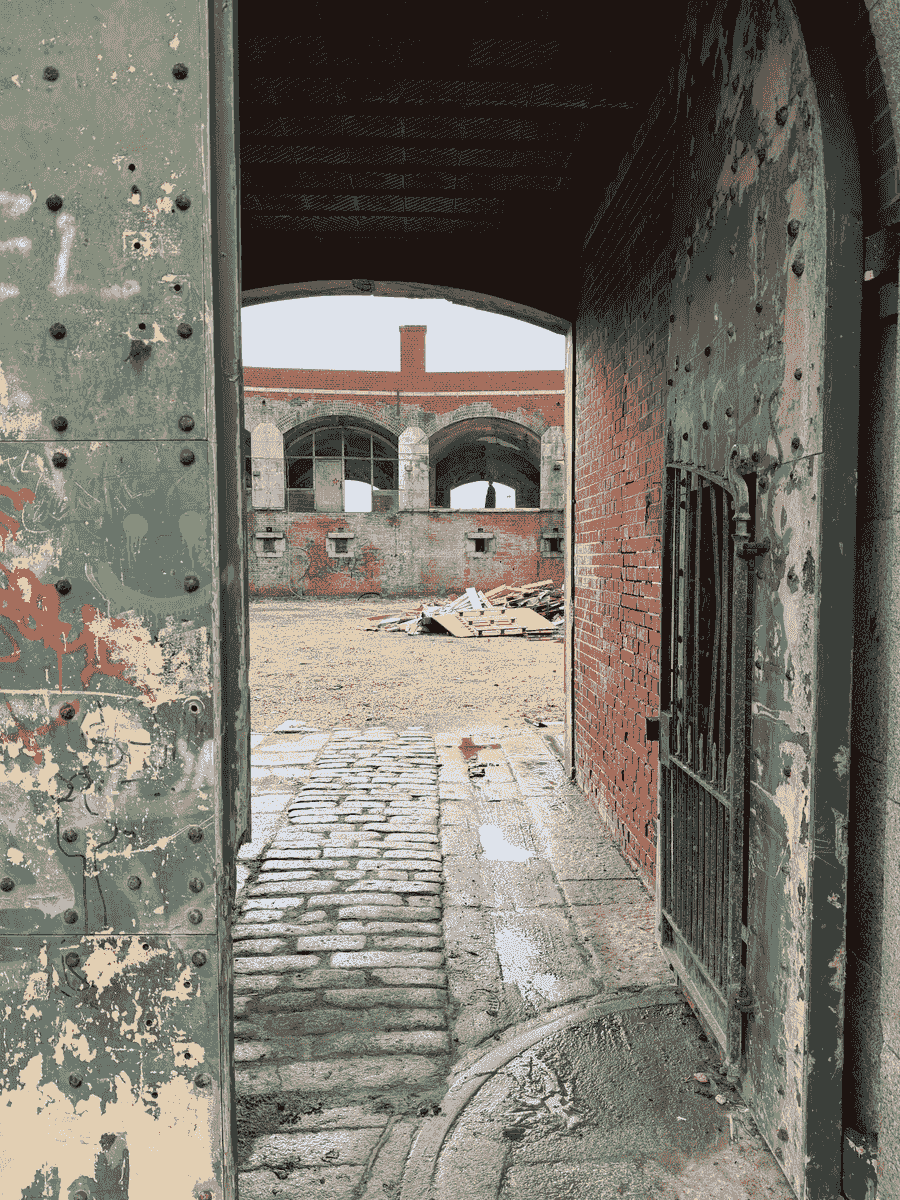
What can you take away from a historic place that isn’t a souvenir?
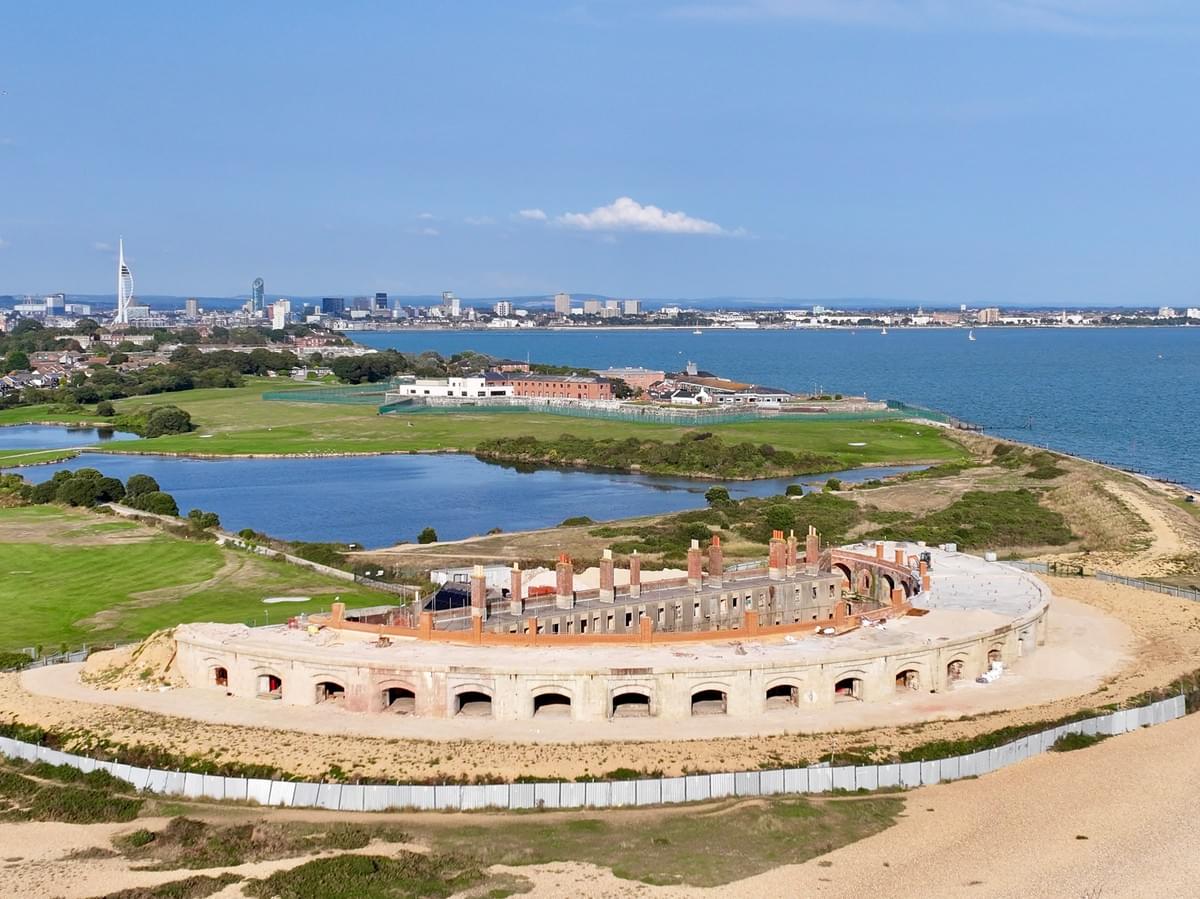
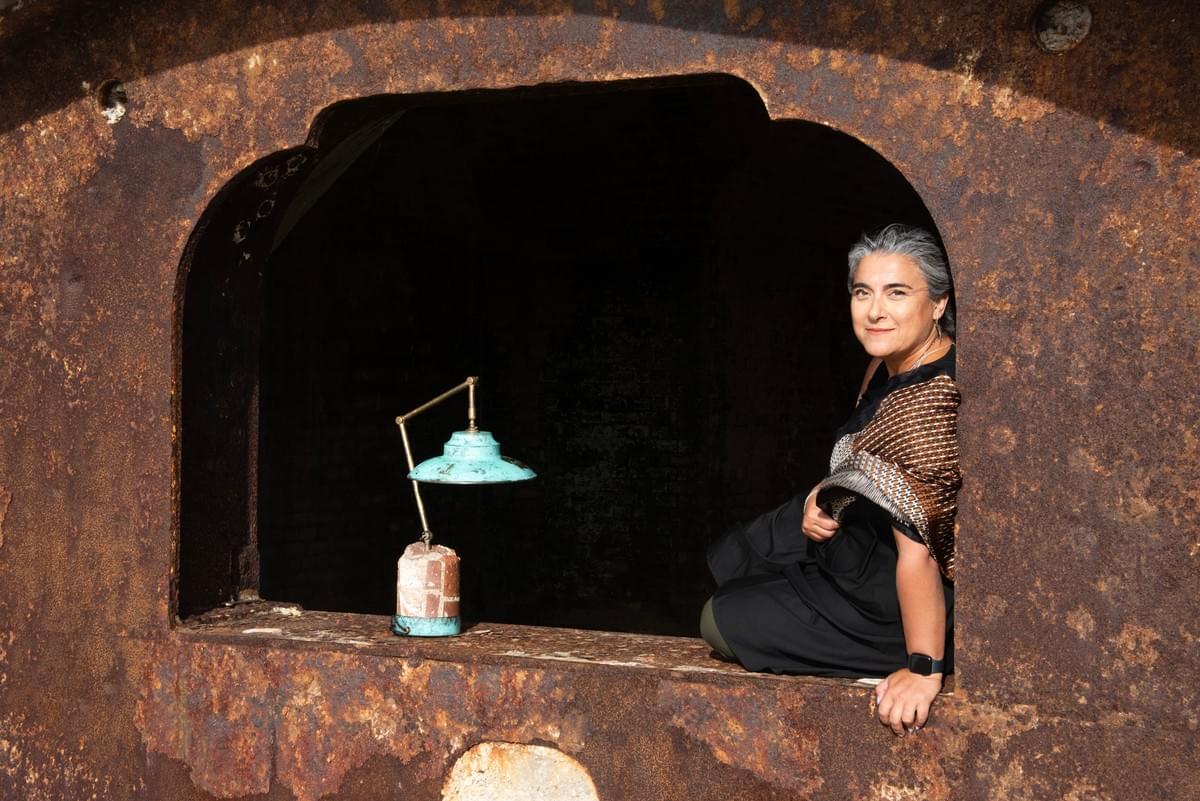
The Shape of Memory is Deniz Beck’s answer to that question: a compact installation tracing the journey of found fragments from Fort Gilkicker, a Victorian sea fort in Gosport, into a contemporary light piece made in Portsmouth.
Presented at Material Matters during Shoreditch Design Week in September 2026, the installation was Deniz’s London Design Festival debut and marked a shift in her practice – from architect and heritage practitioner into more explicitly research-led artistic work.
It brought together conservation architect Deniz Beck, artists Sally Tyrie and Pippa Charlesworth, and metal spinner Craig Palmer of SPIN360°.
Stories You Can Hold
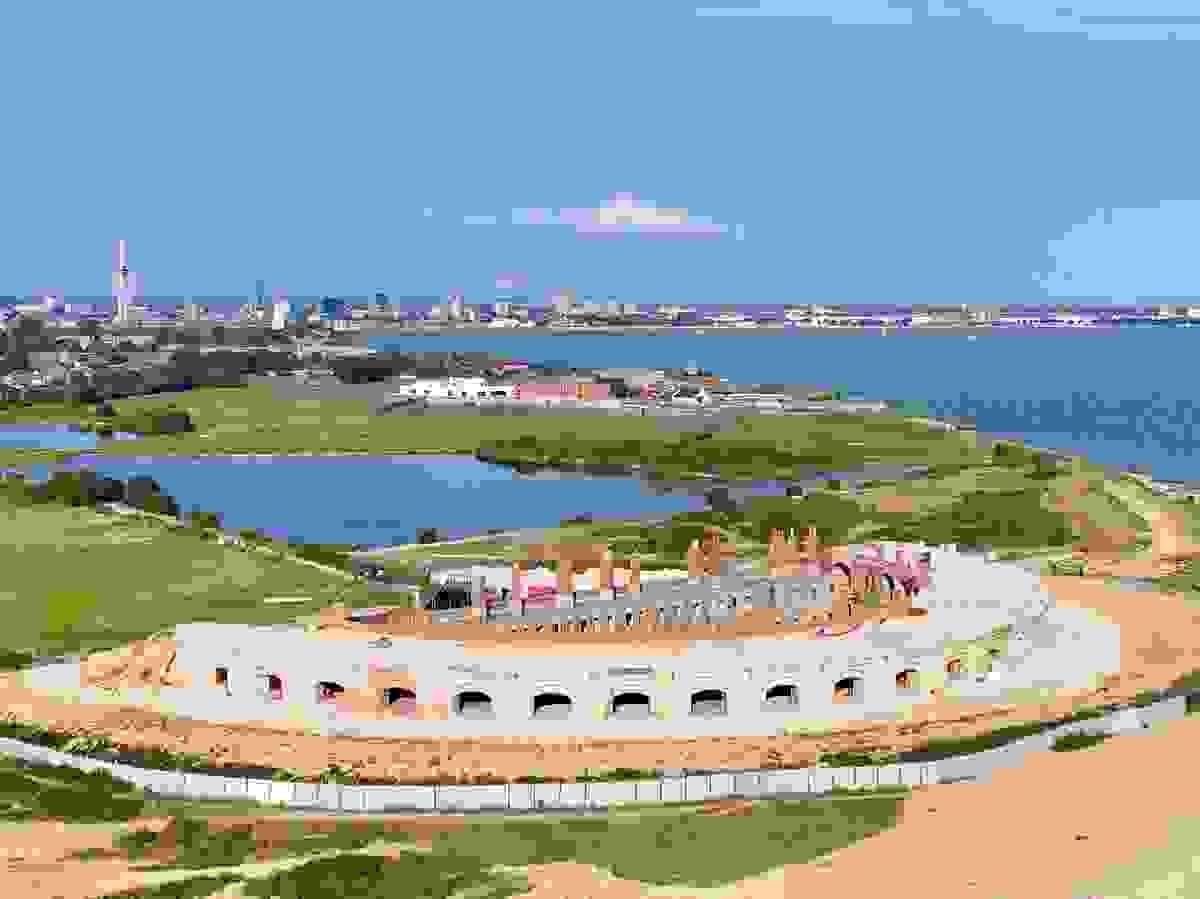
The Shape of Memory is the outcome of Stories You Can Hold, a one-year research and development project at Fort Gilkicker. It set out to test a simple proposition: that heritage sites, artists, artisan makers and design-led venues can work together to create site-specific, story-rich, limited-edition design objects – pieces that carry something of the place they come from.
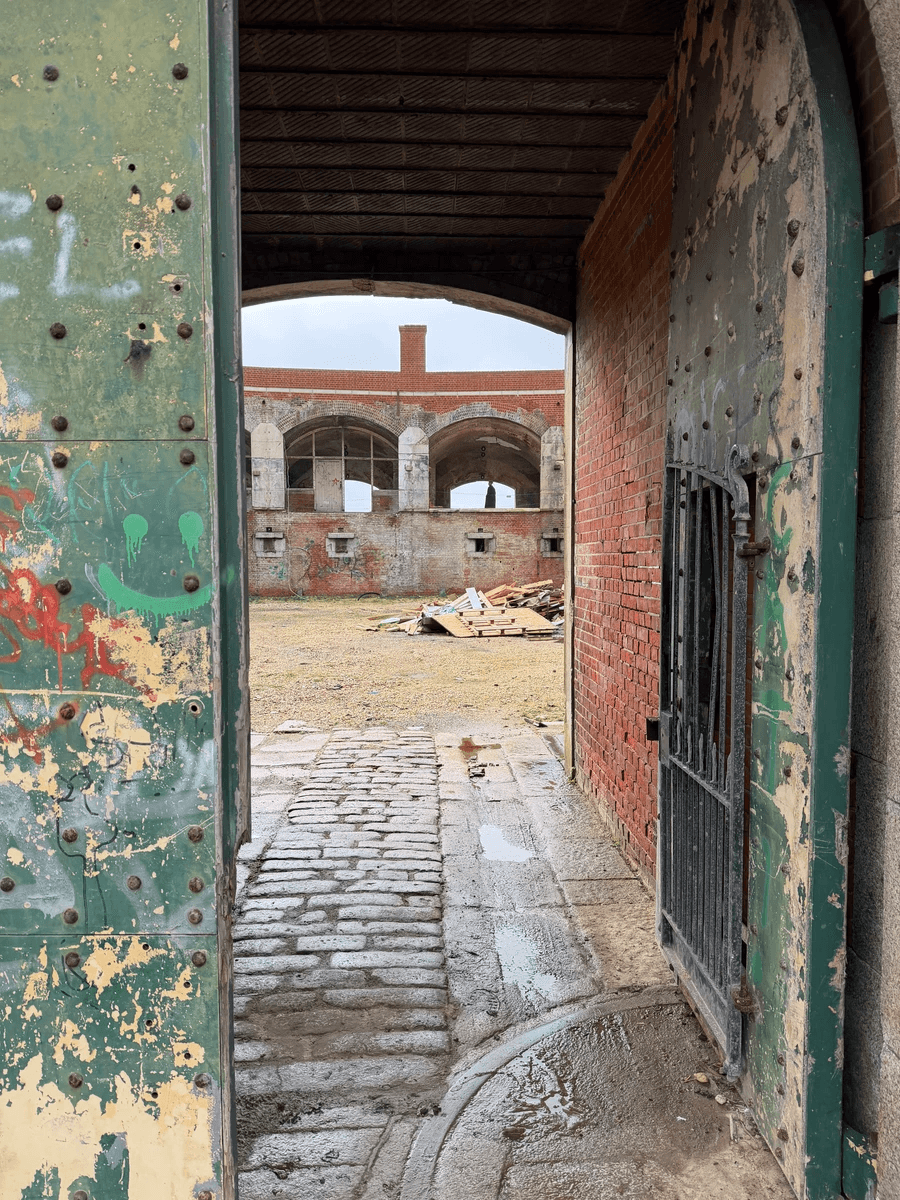
Commissioned under Lord Palmerston and built between 1863 and 1871, Fort Gilkicker was designed to counter the threat of invasion, with 22 gun emplacements set in granite-faced casemates. Decommissioned in 1956, it is Grade II* listed and a scheduled monument.
Deniz Beck is the architect for the fort’s current transformation, which gave the project rare access to a building in the middle of change – and to the material that change leaves behind.
A material archive
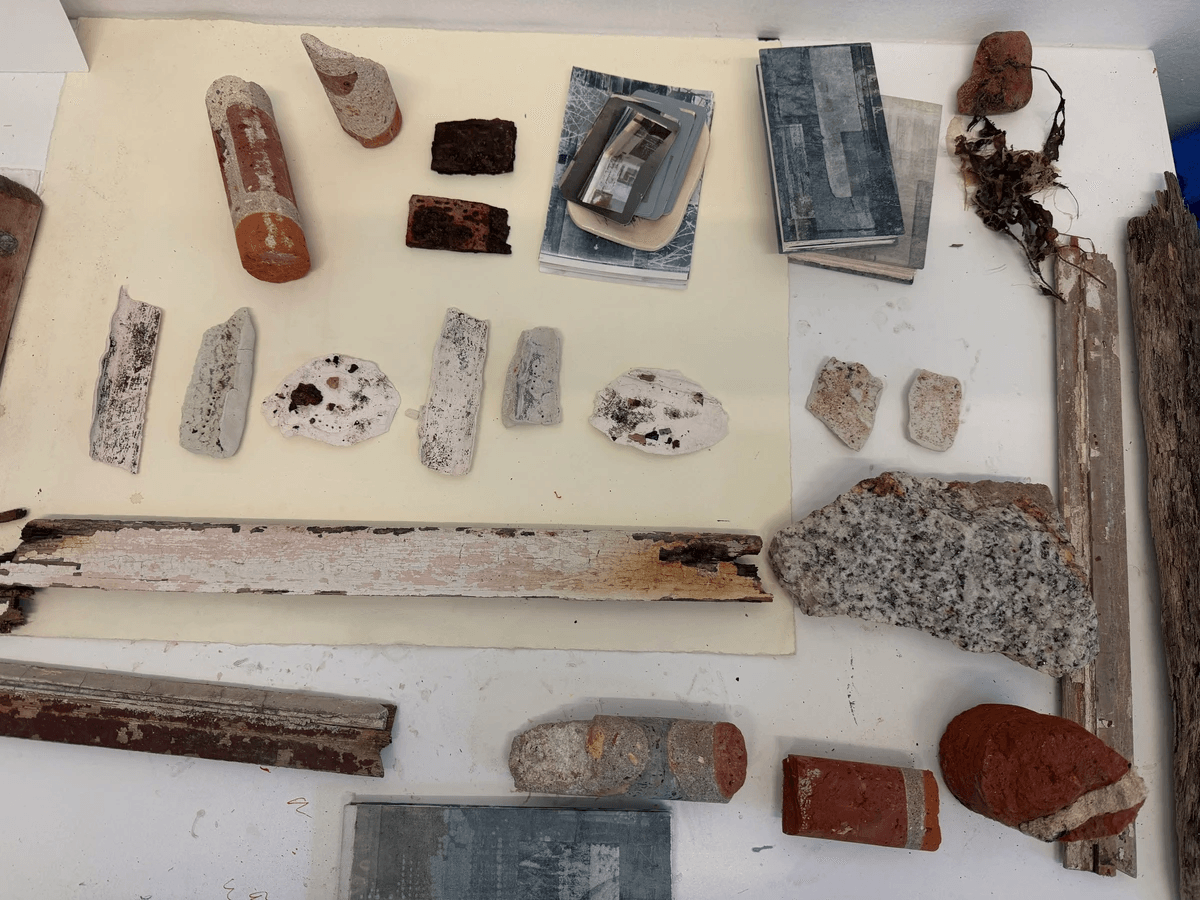
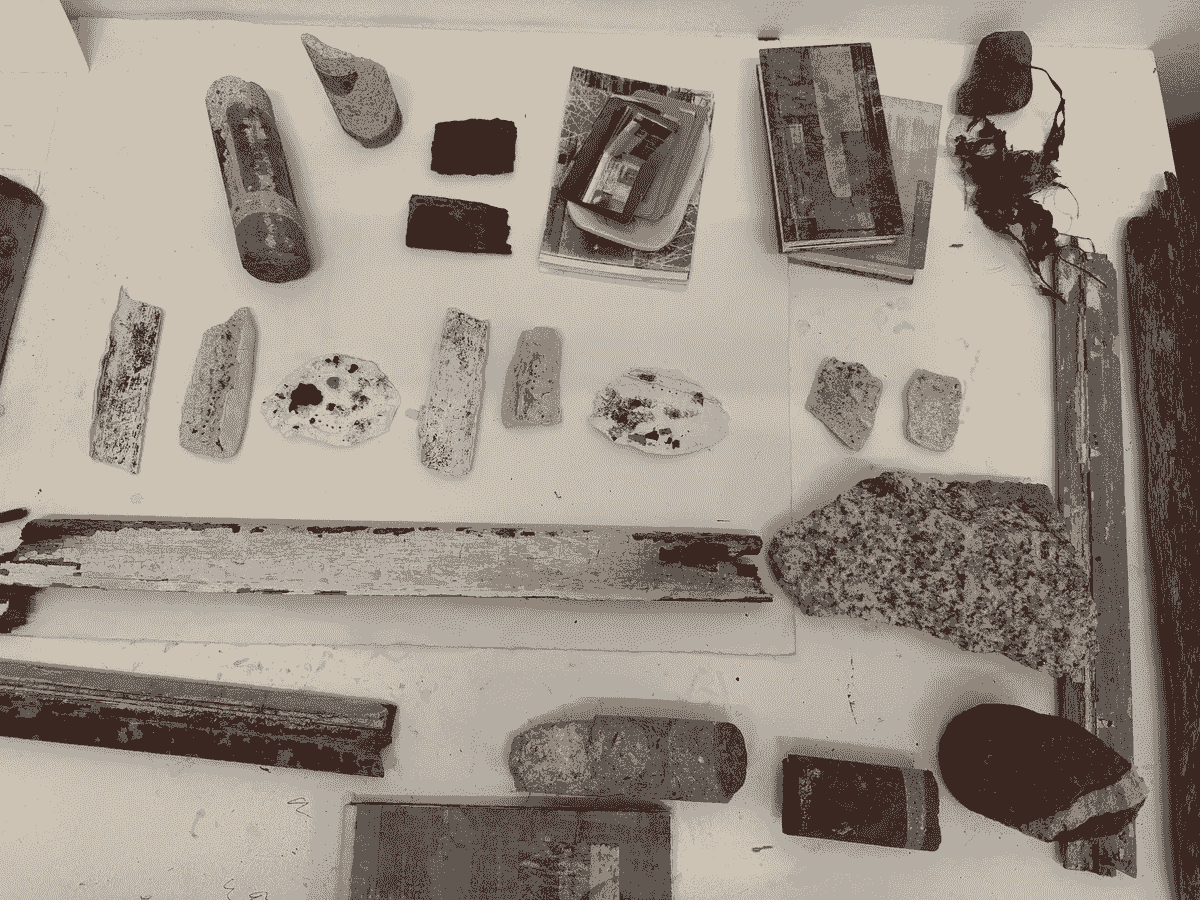
The project began with Deniz and Sally repeatedly visiting the fort to collect and record the small traces usually lost during construction and conservation work: scratches and markings, stone shavings, handmade iron nails, metal fragments, burnt timber, remnants of green paint and debris from the changing fabric of the site.
These were treated not as waste but as a material archive of the fort, carrying evidence of labour, use, decay, repair and loss.
Alongside the physical collecting, Deniz used LiDAR scanning on her phone to capture the fort at a particular moment in time. The scans are fragmentary and incomplete, and that quality became central to the project. For Deniz, they reflect the way memory works: partial, emotional and never quite matching what actually happened.
From fragment to form
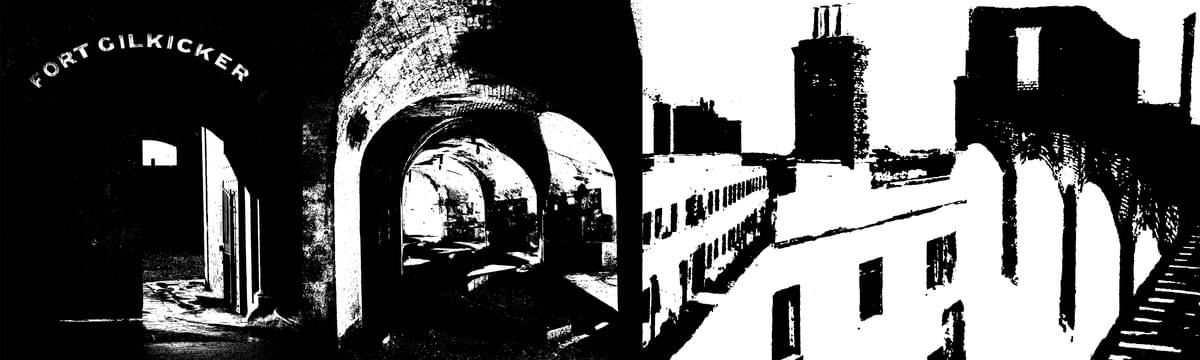
Sally Tyrie’s response did not reproduce the fort literally. Working through touch, pattern, colour, shadow and material intuition, she developed a series of print studies shaped by the fort’s geometry and its relationship between light and dark: deep openings, heavy walls, enclosed spaces and sudden moments of illumination. From that process, the idea of a light fitting emerged as the final object.
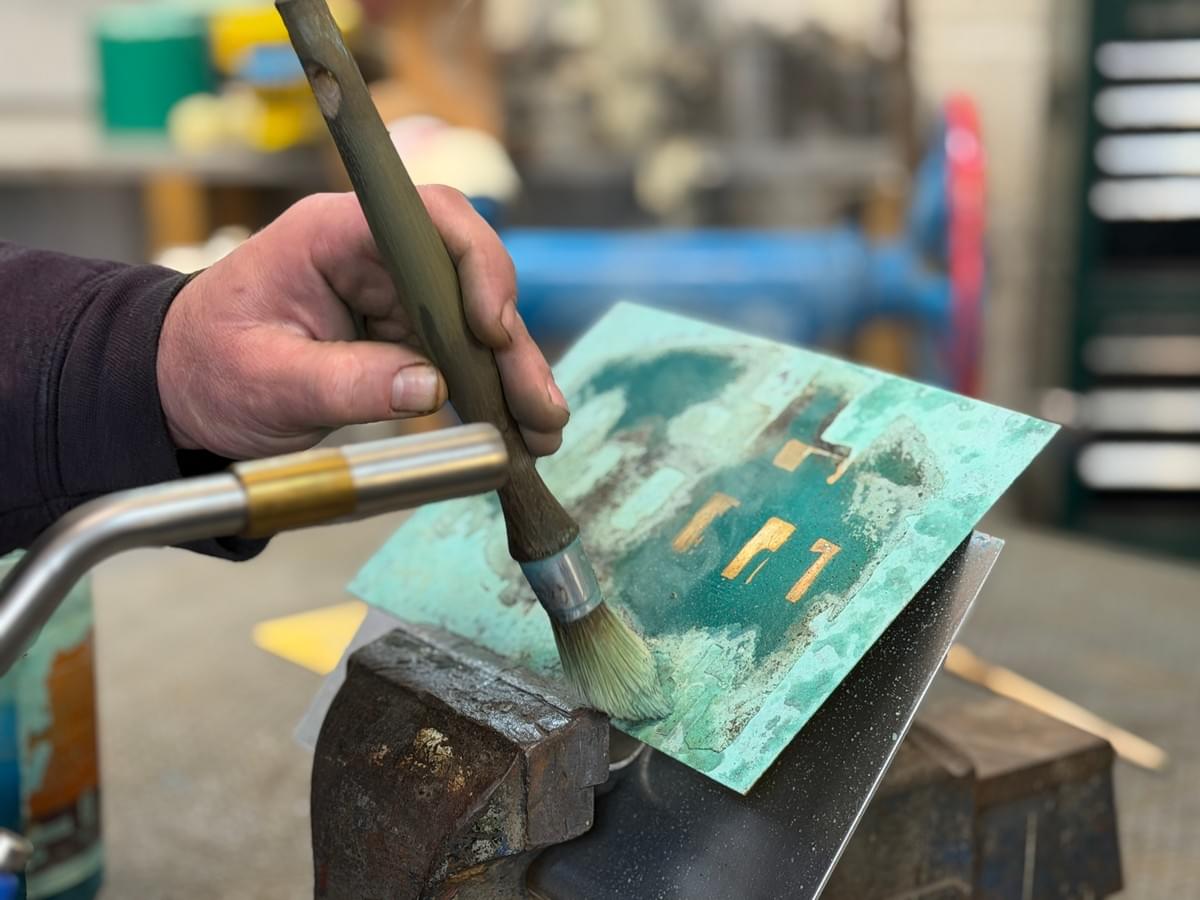
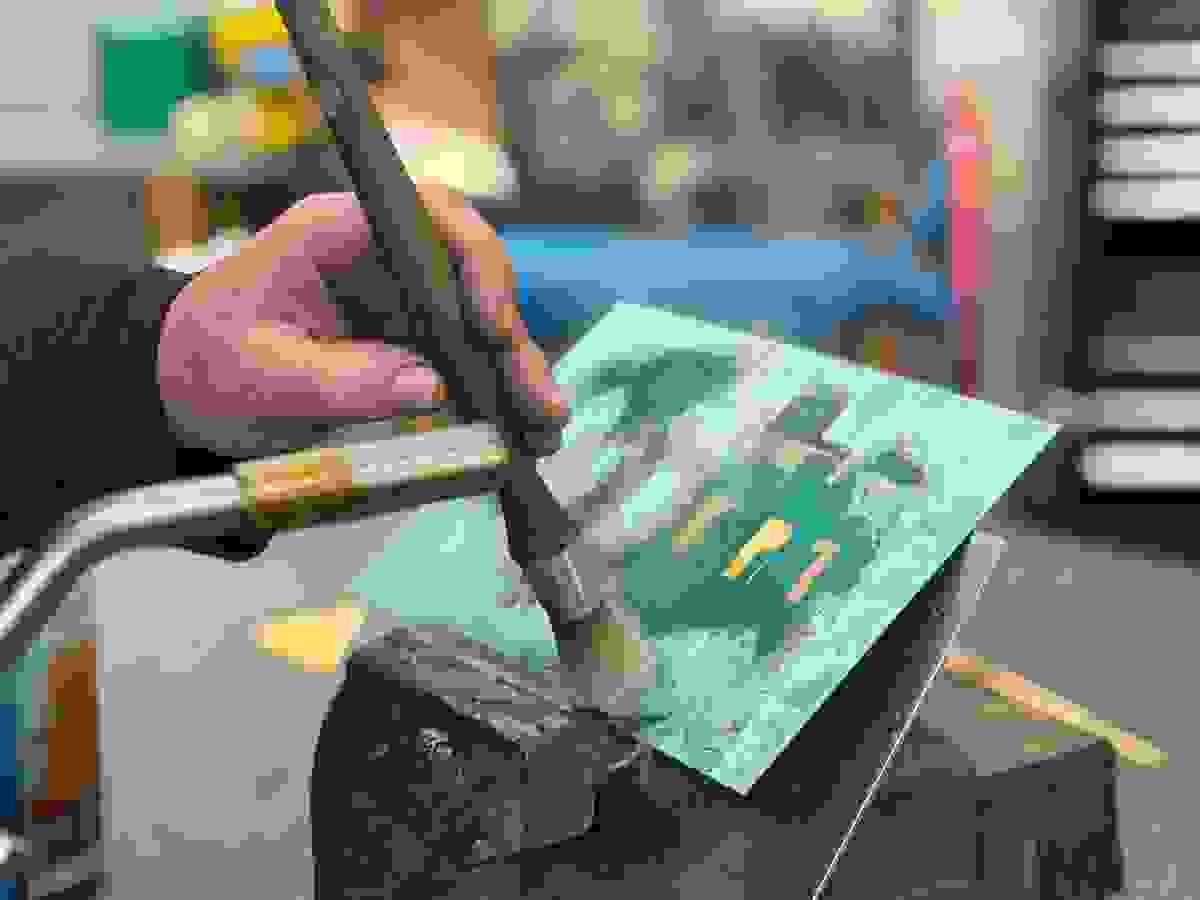
Craig Palmer of SPIN360°, a Portsmouth metal spinner with more than 25 years’ experience, was invited to develop the prototype in response to Sally’s design. Through a series of workshop sessions the team explored brass, etching, fire-marking and fabrication techniques.
One key outcome was an etched brass surface altered and coloured through fire – echoing the burnt timber found on site and embedding heat, accident and transformation into the object itself.
Print studies
Print studies by Sally Tyrie, developed from repeated visits to the fort and abstracting its architecture into strong contrasts of light and shadow.
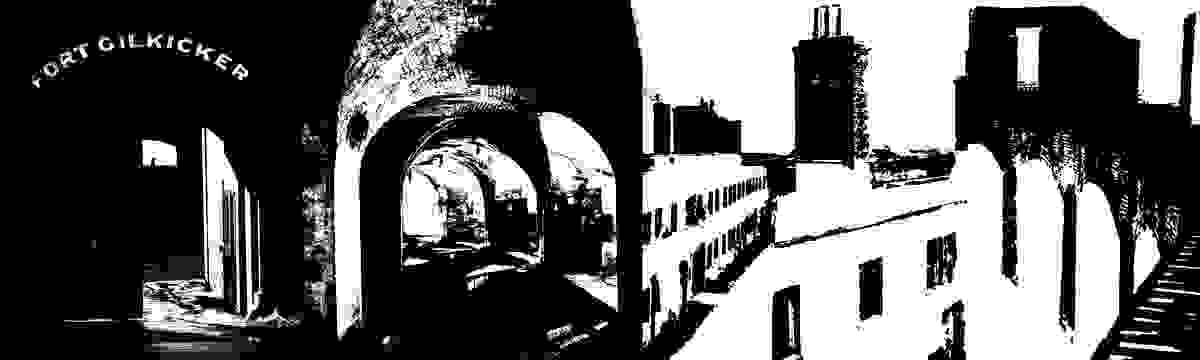
Sally Tyrie at Fort Gilkicker
A short film following the research at the fort.
THE LIGHT
Gilkicker Light No.01 and the installation at Material Matters
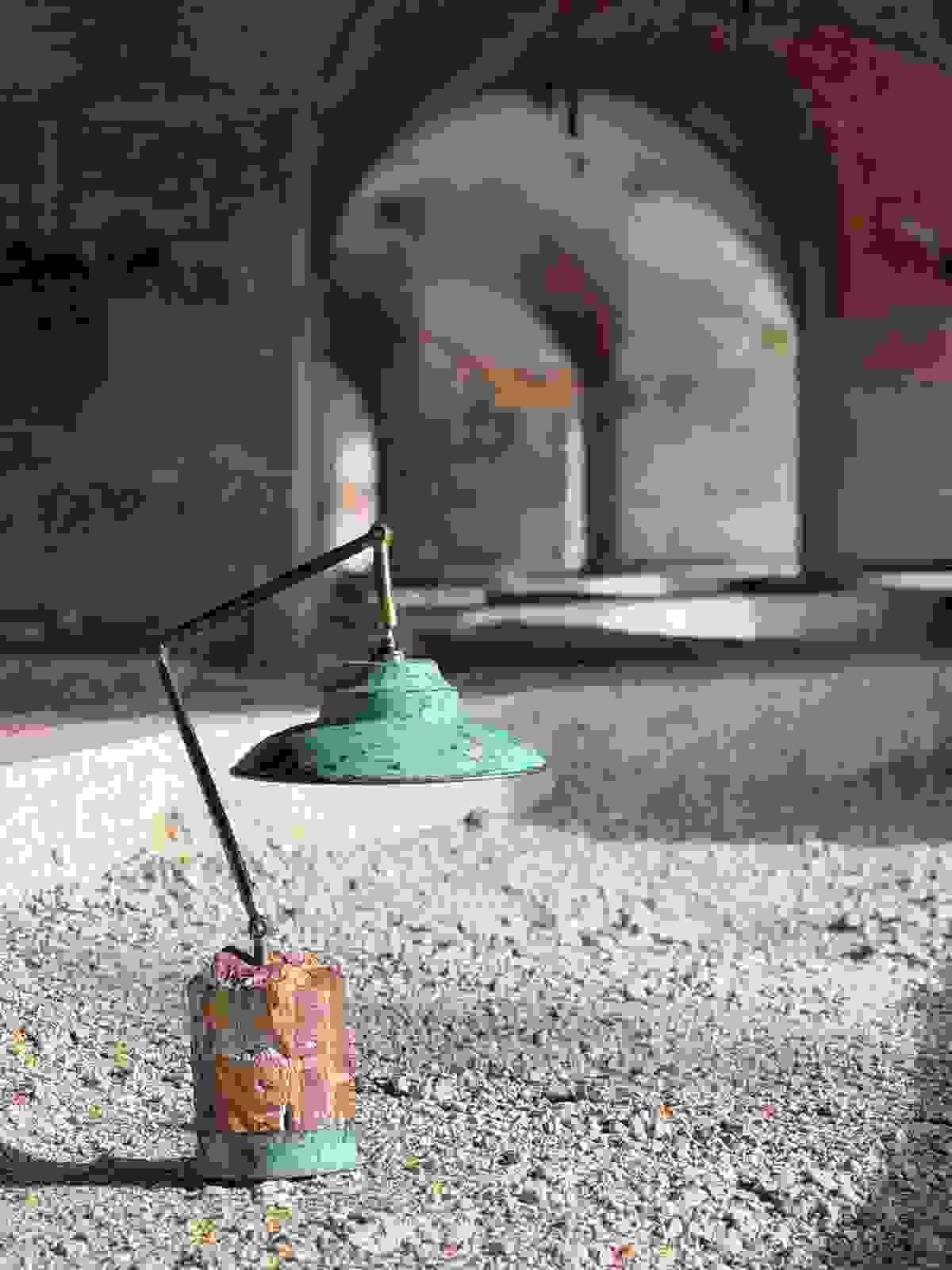
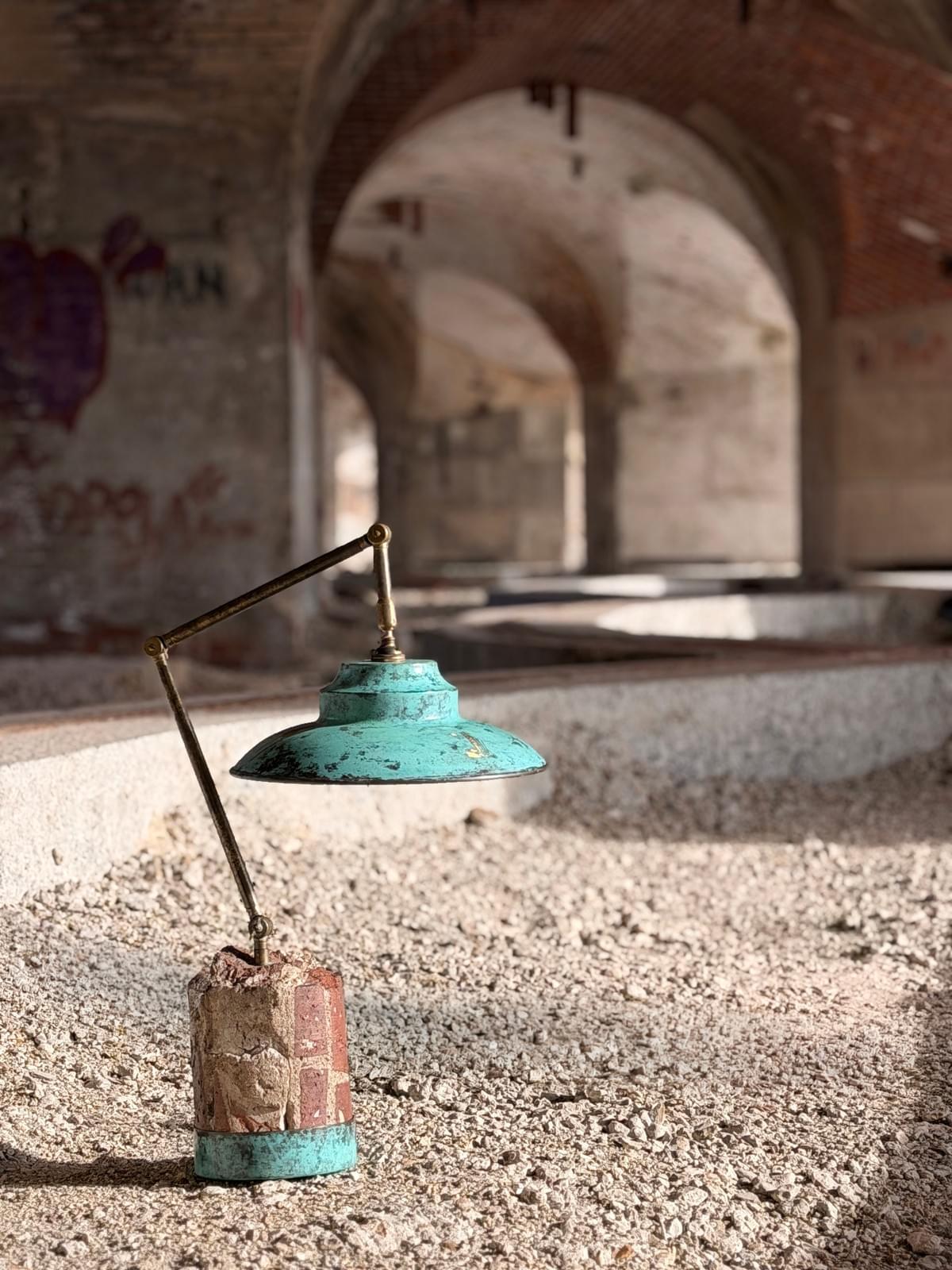
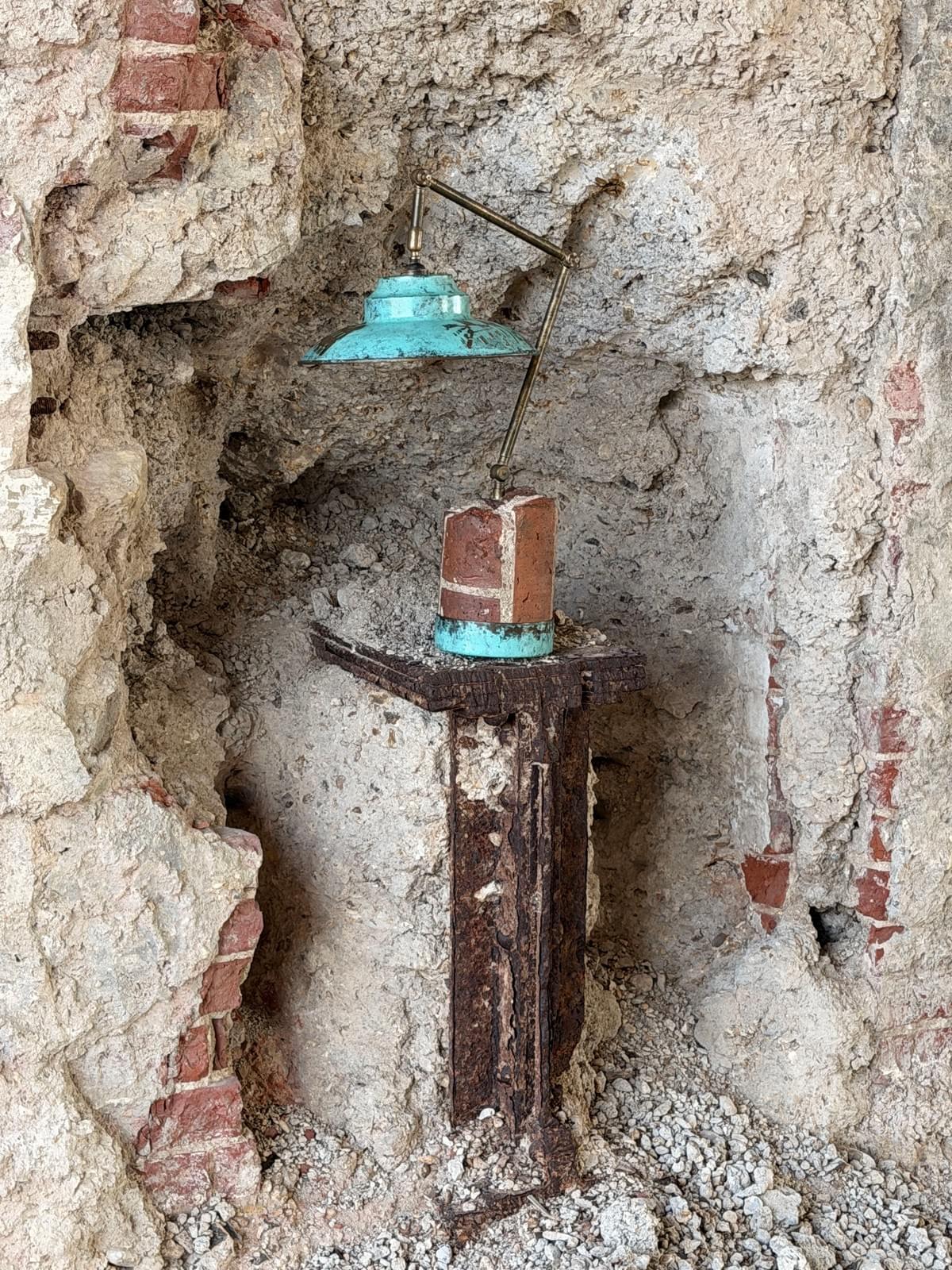
Gilkicker Light No.01
Gilkicker Light No.01 is the first site-derived object in The Shape of Memory series. Its form, surfaces and material palette reference the architecture and material history of the fort, combining contemporary making with fragments and traces collected on site.
The piece incorporates NFC tags that give access to the digital layers of the project: the LiDAR scans, collected materials, artist drawings, workshop tests, process notes and historical context. It is at once physical and digital, functional and narrative, contemporary and rooted in one specific historic place.
The light is not merely inspired by Fort Gilkicker. It is shaped by its geometry, marked by its materials and made through a collaboration rooted in place.
Gilkicker Light No.01 is available on a made-to-order basis.
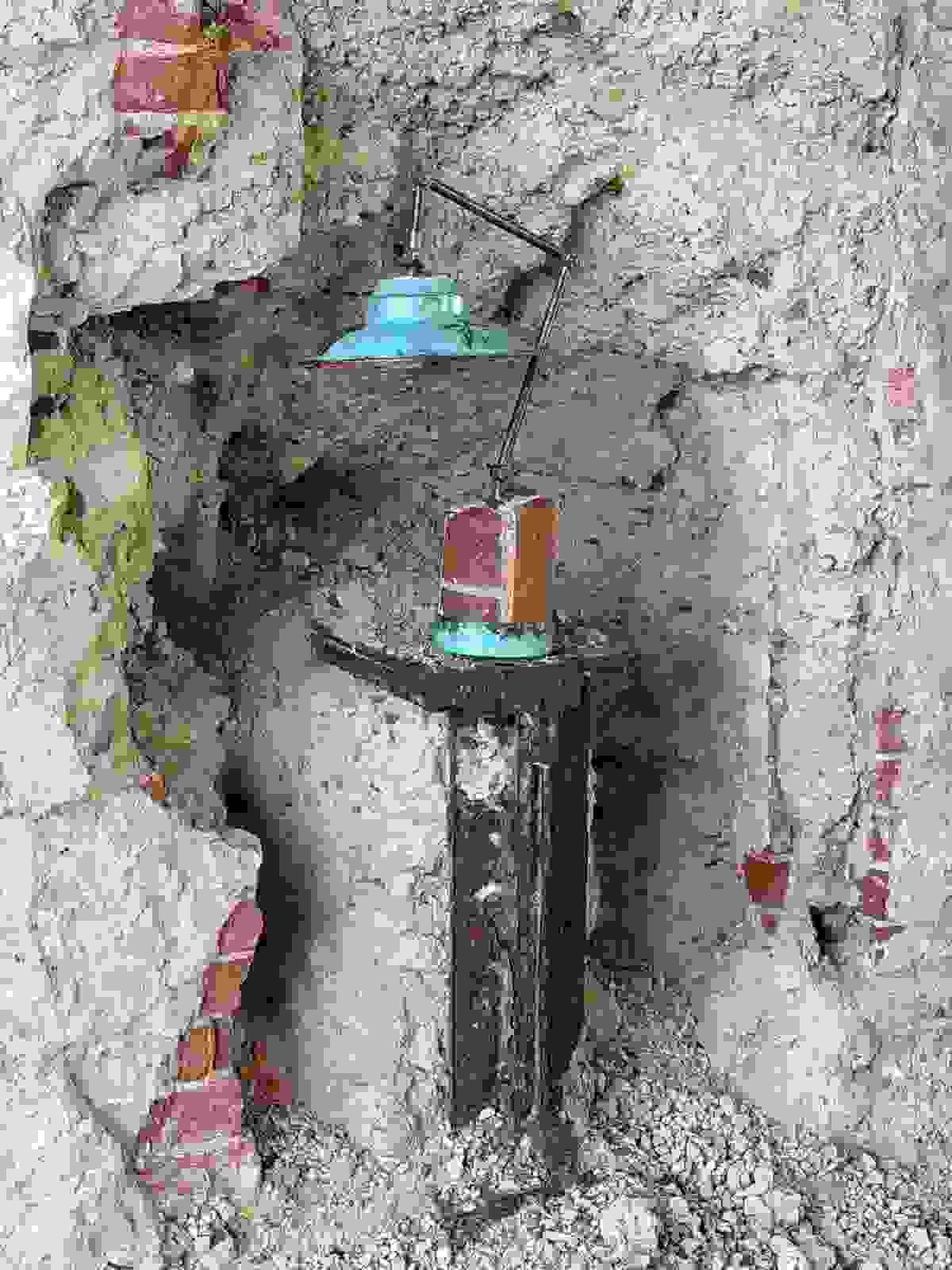
The installation
At Material Matters, The Shape of Memory was presented as a compact linear installation, moving from raw fragment to finished light piece. Visitors encountered the original found artefacts, LiDAR scans, Sally’s sketches and studies, material tests, brass samples, prototype elements and the final light fitting.
Hanging fabric prints by artist Pippa Charlesworth brought the space to life. Pippa’s ongoing site-responsive work at Fort Gilkicker pays particular attention to the fort’s ironwork shield frames – their corroded surfaces, engineered forms and military associations – responding to the layers of construction, weathering, repair and conservation visible across the site.
Material intelligence sits at the centre of the story. Burnt timber, granite, iron, brass, paint, light, shadow and digital scan data all become active materials within the work.
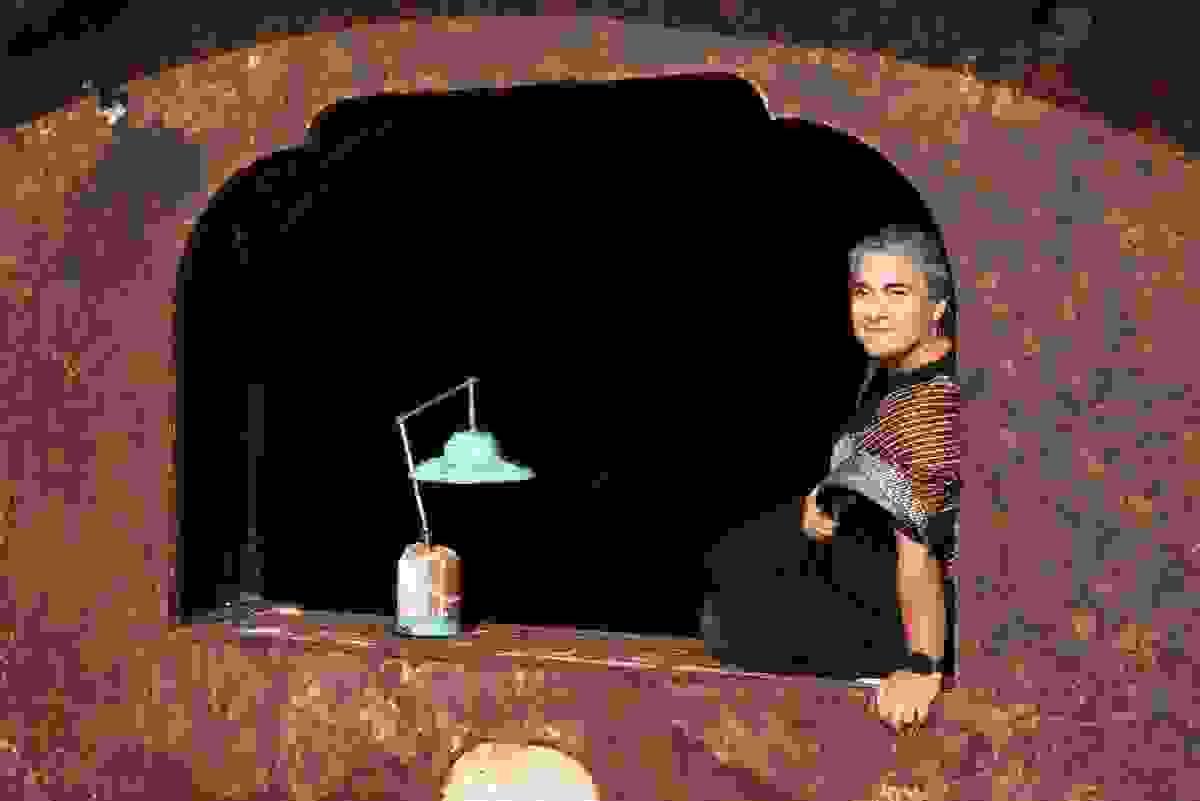
Beyond the object
The Shape of Memory is not simply about making a beautiful object. It proposes a repeatable model for heritage-led design, in which artists and makers work with historic sites in a deeper and more ethical way.
As part of the wider R&D project, Deniz is developing an artist collaboration and licensing framework to support fair partnerships between heritage sites, artists, makers and venues – addressing authorship, intellectual property, royalties and long-term value. The project also opens onto wider conversations around reuse, local craft, circular thinking, limited-edition production and the cultural afterlife of historic places.
“I hope it encourages visitors to see materials not simply as physical objects, but as carriers of history, care and possibility.” – Deniz Beck
MATERIAL DETAILS
Surfaces, scans and patterns from the project

Etched shade detail

LiDAR scan, granite entrance

Corroded shield frame

Pattern from the ironwork

Openings and shadow

Weathered blue surface